

Got a pup with a coat that just won’t cooperate? You’re not alone. Back brushing is one of those grooming techniques that splits the pet community right down the middle—and honestly, we get why. Some dog groomers swear by it, others avoid it like the plague, and most pet parents have never even heard of it.
Here’s the thing: back brushing can be a total game-changer for certain dogs, but it’s definitely not a one-size-fits-all solution. We’ve seen it work wonders on some coats and create absolute disasters on others (yes, we learned this the hard way with a particularly fluffy Golden Retriever who ended up looking like he’d stuck his paw in a socket).
Let’s break down what back brushing actually is and when your furry friend might benefit from this slightly controversial technique.
The Basics
Think of back brushing as going against traffic—but for your dog’s fur. Instead of brushing from head to tail like you normally would, you’re brushing from tail to head, lifting every single hair up and away from your pup’s skin.

Did you know that about 70% of dogs have double coats that standard brushing barely touches? That’s where back brushing shines. While regular brushing mostly handles the topcoat (the pretty stuff you see on the surface), back brushing gets deep into the undercoat where all the real action happens.
This technique props up each strand of hair, giving your brush maximum contact with both the fur and skin underneath. It’s like the difference between dusting the top of your bookshelf versus actually moving the books to clean behind them—way more thorough, but also way more work.
The bonus? You get a much better look at what’s happening with your dog’s skin. We’ve found everything from sneaky mats to mysterious scratches that were completely hidden under a seemingly perfect coat. One client’s Lab mix had a small cut from a hiking adventure that we never would have spotted without back brushing—and trust us, infections are way harder to treat than prevention.
Plus, your pup gets a mini massage in the process. Back brushing stimulates blood flow and helps distribute those natural oils that keep coats shiny and healthy. (Think of it as a spa day, but with more dog hair everywhere.)
When To Use The Back Brush Technique
Here’s where things get interesting. Theoretically, you can back brush any dog—but should you? That’s the million-dollar question that’s been keeping grooming forums busy for years.
For regular maintenance brushing (not preparing for a cut), back brushing is pretty much always beneficial. We use it on about 60% of our clients’ dogs during their regular grooming sessions, and the results speak for themselves—shinier coats, fewer mats, and happier pups.
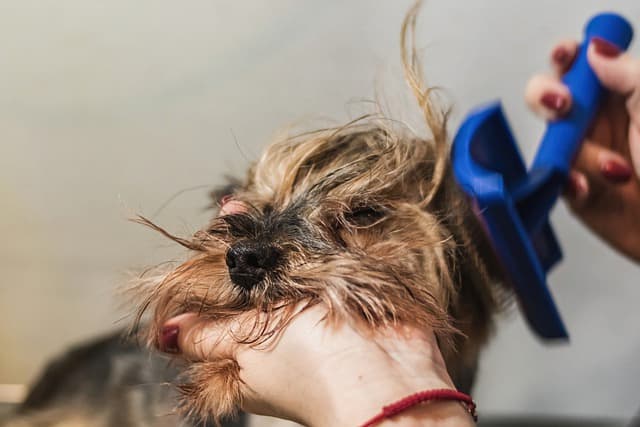
But here’s where professional groomers get divided: using back brushing before clipping or trimming. Some swear it creates the perfect foundation for an even cut. Others think it’s completely unnecessary. We’ve found it depends entirely on your dog’s specific coat type and what look you’re going for.
Dogs with curly or coarse coats? Back brushing before a trim is usually a winner. We tried this with a Standard Poodle who came in looking like a walking cotton ball—after back brushing and trimming, he left looking like he’d stepped out of a dog show. His owner couldn’t stop taking photos.
The technique helps eliminate those stubborn “sticky-outie” clumps (yes, that’s a technical term) and creates a much smoother canvas for cutting. A properly prepped cut also holds its shape longer, which means fewer trips to the groomer and more money in your pocket.
When not to use the back brush technique
Not all coats are created equal, and this is where back brushing can go from helpful to disastrous faster than you can say “bad hair day.”
Dogs with straight drop coats (think Yorkshire Terriers, Maltese, or Afghan Hounds) often look their best when their coats are trimmed exactly as they naturally lay. These coats fall like human hair—smooth, straight, and with natural parts that shouldn’t be messed with.

We learned this lesson with a gorgeous Yorkie whose owner requested a “professional trim.” After back brushing and cutting, the poor little guy looked choppy and uneven—nothing like the flowing coat he’d walked in with. His natural hair pattern was completely disrupted, and no amount of brushing could fix it until his coat grew back out.
The problem? Back brushing lifts the hair up and away from its natural direction, so when you cut it and brush it back down, you’re left with an unnaturally short and patchy appearance. Not exactly the look most pet parents are going for.
Also, pay attention to your dog’s comfort level. If your pup shows signs of discomfort or sensitivity during back brushing, don’t push it. A positive grooming experience is worth way more than a perfect cut. We’ve seen too many dogs develop grooming anxiety because someone insisted on a technique that made them uncomfortable.
The bottom line on using this brush stroke
Look, here’s what we tell our clients: the back brushing debate mostly exists because people treat it like an all-or-nothing technique. The truth is way more nuanced than that.
For maintenance brushing? Go for it (gently). For pre-trim prep? It depends entirely on your dog’s coat type and your style preferences. Curly and coarse coats usually love it. Straight drop coats? Probably not so much.
We use back brushing on about half our grooming clients, and the decision comes down to three things: coat type, desired outcome, and the individual dog’s tolerance. Some dogs practically fall asleep during back brushing (we’re looking at you, Golden Retrievers), while others act like we’re torturing them with a medieval device.
Start small if you want to try this at home. Test it on a tiny section of your dog’s coat and see how they react. If they’re cool with it and their coat type seems to benefit, gradually work your way up to larger areas. Just remember—patience is key, and your dog’s comfort comes first, always.
Since back brushing is excellent for detangling and distributing natural oils, it’s definitely worth adding to your regular grooming routine. Just don’t expect miracles, and don’t feel like you’re failing as a pet parent if your dog’s coat doesn’t cooperate with the technique.
Ready to give your pup the professional grooming experience they deserve? Our team at Hound Therapy knows exactly which techniques work best for each coat type—no guesswork, no experiments, just results. Schedule your appointment today and let us show you what a difference the right approach makes.
Want more grooming tips that actually work? Check out our other grooming guides or reach out through our contact form—we love talking shop with fellow pet parents who want the best for their furry family members.