

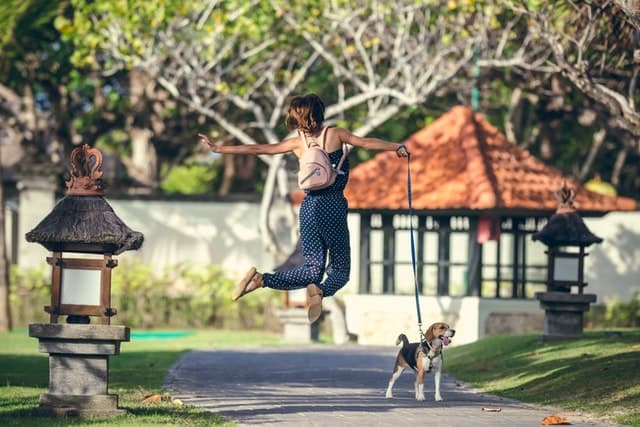
There’s nothing quite like coming home to a dog who acts like you’ve been gone for three years instead of three hours. You know the drill—your pup launches themselves at you like a furry missile, all wiggles and excitement. It’s adorable when it’s just you two, but when Aunt Martha comes over and gets tackled by your 70-pound golden retriever? Not so much.
Here’s the thing: your guests might not find your jumping bean as charming as you do. And honestly, for everyone’s comfort (and safety), it’s time to teach your four-legged greeter some manners. With a little patience, some strategic treat-throwing, and yes, probably some frustration, you can help your dog channel all that joy into better ways. Let’s dive into how to stop your dog from jumping on people—without crushing their sweet spirit.
Why Do Dogs Like To Jump?
Dogs jump because, well, it works. As puppies, they figured out pretty quickly that bouncing up gets them exactly what they want: attention, pets, and that sweet human connection they crave. Between dogs, jumping is totally normal greeting behavior. But when your 80-pound lab mix tries the same move on your neighbor’s six-year-old? That’s where things get complicated.

Here’s what’s happening in your dog’s head: “Human = good things happen when I get as close to their face as possible!” Even when you’re saying “no” or gently pushing them down, you’re still giving them attention. And to your pup, any attention is good attention. We’ve accidentally trained them that jumping equals human interaction. Oops.
Dangers Of A Jumping Dog
Most of us can handle a jumping dog (even if it means doing laundry more often). But here’s what really matters: Did you know that over 800,000 people require medical treatment for dog-related injuries each year? Most aren’t from bites—they’re from knockdowns and scratches.
Well-groomed little kids are especially vulnerable. A medium-sized dog jumping can easily knock over a toddler, and those sharp nails can leave scratches that turn a fun visit into tears and first aid. We’ve seen it happen—one minute everyone’s laughing, the next minute there’s a crying child and very embarrassed parents.
Elderly visitors face similar risks. What might be a minor stumble for you could mean a serious fall for someone with balance issues. Plus, let’s be honest—even the most dog-loving guests don’t appreciate muddy paw prints on their nice clothes.
And if you think the problem will just go away on its own? Think again. Dogs who aren’t taught proper greetings often escalate the behavior. They start jumping not just when people arrive, but whenever they want attention, food, or to go outside. Before you know it, you’ve got a 50-pound attention-seeker launching themselves at you every time you stand up from the couch. This gets old fast, but it can be reversed with the right dog training.
Tips on how to stop your dog from jumping on people
Ignore The Behavior
Your mission is to catch your dog before they even think about launching. The second you see those tell-tale signs (perked ears, crouched position, that “I’m about to explode with excitement” look), redirect their attention.
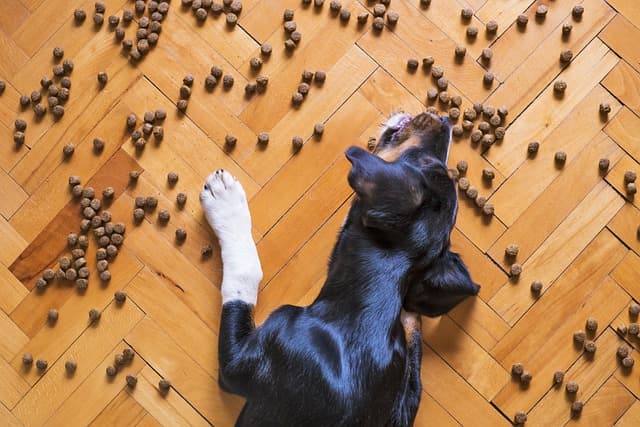
Try this: scatter some treats on the floor the moment someone approaches the door. Your dog’s brain will shift from “MUST JUMP ON HUMAN” to “TREATS ON GROUND!” It’s like magic, but with kibble.
Practice this with a friend. Have them come to the door while you’re armed with treats. The instant your dog starts to move toward your friend, toss those treats. Let your friend come in normally while your dog is busy sniffing around the floor. When your dog finally settles with all four paws down, that’s when the praise party begins.
Redirect Their Attention
Your dog must be distracted before it can get a single paw off the ground. You can accomplish this by scattering treats on the floor or speaking a ‘sit’ command.
Try employing the help of a friend for this step, inviting them in as you would a regular guest.
Your dog will likely behave as usual, wanting to jump up and greet your guest.
Before they can jump, throw some treats down. Have your friend make their way inside and behave as normal. If your dog jumps, wait until they calm down and return to the ground.
Reward them with treats once they’re on the floor. Make sure your friend knows to ignore your dog rather than pushing them away or telling them ‘no’.
Only Reward Good Behavior
This seems obvious, but it’s where most people mess up. Any attention—positive or negative—while your dog is jumping counts as a reward in their mind. The magic only happens when those paws are planted firmly on the ground.
When your dog is standing calmly (even if they’re vibrating with excitement), that’s your moment. Give them treats, gentle pets, and praise. Make it clear that THIS is the behavior that gets them what they want.
Get your practice friend involved in the reward system too. Once your dog starts figuring out that staying grounded = good things, keep the rewards coming. The more your dog realizes that visitors also reward calm behavior, the faster they’ll generalize the lesson.
Make the training sessions fun—dogs learn better when they’re enjoying themselves. If it feels like work for you, it probably feels like work for them too.
Don’t let your guests become enablers
This might be the hardest part of the whole process. You’ll need to have some potentially awkward conversations with visitors. Let friends and family know you’re actively training your dog not to jump, and ask them to please ignore jumping behavior—even if they don’t mind it.
Strangers on walks are trickier. You can’t exactly stop every person on the street and explain your training program. In these situations, keep your dog close to your side or cross the street if you see potential jump targets approaching. Some trainers recommend teaching a solid “heel” or “behind” command for these moments.
At home, if your dog gets too amped up when guests arrive, there’s no shame in using management tools. A gentle collar hold, a brief time-out in another room, or even popping them in their crate until the initial excitement dies down can prevent setbacks. Training is the long-term goal, but management keeps everyone safe in the meantime.
Stay Consistent
Here’s where a lot of families trip up: mixed messages. If Dad doesn’t mind jumping but Mom is trying to train it away, your poor dog is going to be incredibly confused. They’re not being stubborn—they literally don’t understand the rules.
If someone in your household actually enjoys the jumping greeting, teach a specific command for it. Something like “up” paired with chest pats can signal when jumping is okay. This way, your dog learns that jumping is a behavior they do on command, not their default greeting style.
But be warned—if your dog starts extending the “up” behavior to other people, you’ll need to circle back to your training routine. Dogs don’t automatically understand that the jumping rule only applies to certain humans.
Ready for Calmer Greetings?
Teaching your dog not to jump takes time—usually several weeks to a few months, depending on how long they’ve been practicing the behavior. But the payoff is huge: guests who actually want to visit, clothes that stay clean, and a dog who can greet people politely without losing any of that joyful personality we love so much.
Remember, every dog learns at their own pace. Some pick it up in days, others need months of consistent practice. The key is staying patient and celebrating the small wins along the way.
Need extra help with your jumping dog? Our team at Hound Therapy has worked with hundreds of bouncing pups, and we’d love to help yours learn some greeting manners. Check out our dog training services or give us a call to chat about your specific situation. You can also book an appointment through our online booking app—we’re here to help you and your dog succeed together.